
Routine maintenance is a short list of checks and fluid changes performed on a schedule, and the schedule that matters is the one in your owner's manual, not the one the oil-change chain prints on a sticker. Everything below is about that list: what each item actually does, how often it needs doing, what it costs you in money and time, and which items you can safely stretch versus which ones punish you for stretching.
Oil changes: interval, oil type, and what the interval is really protecting
Follow the manual's interval and the manual's oil specification, and if the two conflict with a quick-lube sticker, the manual wins. The sticker is a sales tool; the manual is the document the manufacturer uses to decide whether to honor a warranty claim on a sludged engine.
Modern engines running full synthetic on a normal-duty schedule commonly go far longer between changes than the 3,000-mile habit most drivers inherited from an era of conventional oil and looser tolerances. The number itself is in your manual and often in the oil life monitor, which counts cold starts, short trips, and engine load rather than just miles. Trust the monitor over your memory of what your father did.
Two conditions override the normal interval. The first is severe service, which most manuals define as repeated short trips where the engine never reaches full operating temperature, heavy towing, dusty air, or extensive idling. Short-trip driving is the one that catches people, because it looks gentle. It isn't. An engine that warms up and shuts down repeatedly accumulates moisture and fuel dilution in the crankcase, and no oil additive package fully compensates. The second is turbocharging or direct injection, both of which run the oil harder and hotter than a naturally aspirated port-injected engine.
What it costs you: full synthetic and a quality filter run more than conventional oil and a bargain filter, and the difference buys you margin on the interval. What goes wrong if you stretch too far: varnish and sludge first, visible as dark deposits under the oil cap, then noisy lifters on cold start, then oil consumption as ring packs gum up. By the time you notice the noise, the cleanup is expensive.
Check the level between changes regardless of interval. A dipstick check takes a minute and catches the slow leak or the consumption problem while it's still cheap. Do it with the engine off and the car on level ground, and read the stick twice with a wipe in between.
Tires: pressure, rotation, and the placard that outranks the sidewall
Set tire pressure to the number on the vehicle placard, not the maximum printed on the tire sidewall. The placard is the label required on light vehicles that shows critical tire information, including recommended inflation pressure and tire size designation, and NHTSA says that pressure is measured in pounds per square inch (psi). The sidewall number is the tire's maximum capacity, not the pressure the car was engineered around.
Find the placard on the driver's door jamb, the fuel door, or inside the glovebox, and cross-check it against the owner's manual. Check pressure cold, meaning before the car has been driven more than a short distance. Driving heats the air and raises the reading, so a tire set to the placard after a highway run will be underinflated once it cools.
Underinflation is the expensive failure mode. A tire running low flexes more, heats more, wears its shoulders faster, and costs fuel. Overinflation is milder but still real: the center of the tread wears first and the contact patch shrinks, which shows up as a nervous feel and reduced grip in the wet. Check monthly and before any long trip, and don't forget the spare, which quietly deflates for years in the trunk.
Rotation intervals are in the manual, and the reason to keep them is tread wear evenness. Front tires on a front-wheel-drive car do the steering and most of the braking, so they scrub their shoulders faster than the rears. Rotating on schedule spreads that wear so all four tires reach replacement together, which lets you buy a matched set instead of replacing two at a time and living with mismatched grip.
What rotation costs: a shop charge or an hour of your own time with a jack and stands. What skipping it costs: a set of tires replaced early and unevenly, plus a car that pulls.
Fluids other than oil: coolant, brake, transmission, and the ones people forget
Every fluid on the car has a service interval, and the ones drivers skip longest are usually the ones that fail quietly. Coolant degrades into an acidic, corrosion-promoting mix that eats radiators and heater cores from the inside. Brake fluid absorbs moisture from the air over time, which lowers its boiling point and can produce a spongy pedal or fade under hard repeated braking. Transmission fluid carries heat and clutch material and, in a neglected unit, turns dark and burnt-smelling before the shifts get harsh.
The manual lists intervals for each. Follow them, and use the specified fluid type rather than a universal substitute, because coolant chemistry and transmission fluid friction modifiers are matched to the materials in your system. Mixing the wrong coolant type is a common and expensive mistake that shows up as gel or sludge in the radiator.
Between services, look at the fluid, not just the level. Brake fluid in the reservoir should be clear and pale; dark fluid means it's overdue. Coolant should be the color the manual specifies, not rusty or murky. Transmission fluid on the dipstick should be reddish and translucent, not brown or black. These are free checks that tell you whether the interval is holding.
The forgotten ones: power steering fluid on hydraulic systems, differential and transfer case fluid on trucks and all-wheel-drive cars, and washer fluid, which is trivial until you're driving into a low sun with a salt-smeared windshield. Windshield wiper blades belong in this category too, because they degrade from sun and ozone faster than most people replace them, and a streaking blade in a rainstorm is a safety item, not a comfort item.
Filters and belts: cheap parts, expensive failures
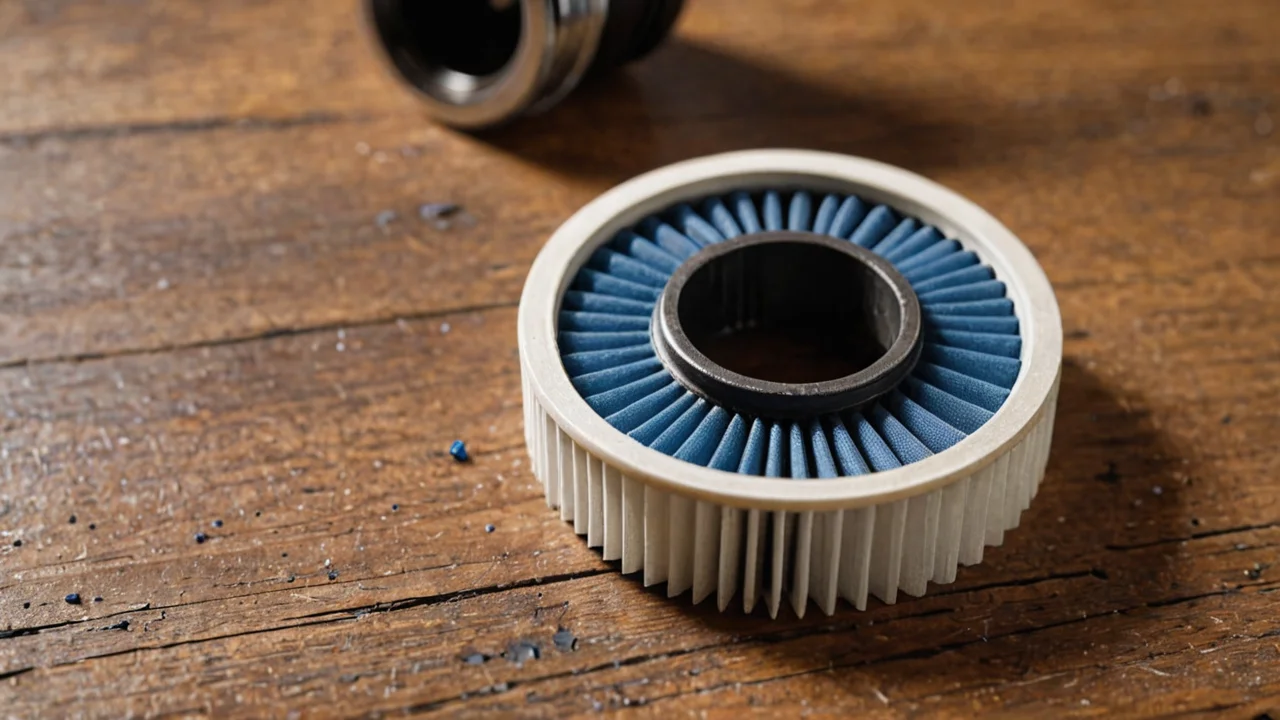
Air, cabin, and fuel filters are inexpensive and their failure modes are gradual, which is why they get skipped. A clogged engine air filter costs fuel and power before it causes any symptom you'd notice. A loaded cabin filter fogs the windows and pushes the blower harder. A restricted fuel filter, on cars that still have a serviceable one, can starve the engine under load.
Inspect the engine air filter at each oil change and replace it on the manual's interval or sooner in dusty conditions. The cabin filter is usually behind the glovebox and takes minutes to swap. The fuel filter interval is in the manual; on many modern cars it's in the tank and not a routine service item at all, so check before you buy a part you can't reach.
Belts are the item where routine inspection pays for itself. A serpentine belt shows its age as glazing, cracking, or fraying at the ribs, and it fails without much warning. A failed belt means no alternator, no power steering, and often no water pump, which turns a cheap part into a tow. Look at the belt at each oil change and replace it on the manual's interval, and replace the tensioner and idler pulleys with it if they show play or noise.
Timing belts are a separate and much more expensive category. On interference engines, a timing belt failure lets pistons meet valves and destroys the head. The interval is in the manual and it is not a suggestion. If you don't know when yours was last done and the car is near the mileage, budget for it.
Brakes, battery, and the inspection items that catch problems early
Brake pads and rotors wear on a schedule set by how you drive, not by miles alone. City driving with constant light braking wears pads faster than highway cruising. Inspect pad thickness at each tire rotation, and listen for the wear indicator, that high-pitched squeal that starts before the pad is gone. A grinding noise means metal on metal and a rotor replacement you could have avoided.
Brake fluid is the item most often skipped in this system. Even if the pads are fine, moisture-contaminated fluid boils under hard use and the pedal goes long. The manual gives an interval; follow it.
The battery is the other predictable failure. Most batteries last a handful of years, and they fail fastest in temperature extremes, hot climates included, because heat degrades the plates even though cold is what exposes a weak battery. Watch for slow cranking, dimming lights at idle, or a battery light, and have the charging system tested rather than just replacing the battery and hoping. Clean terminal corrosion with a baking-soda solution and a brush, and check that the hold-down is tight.
The rest of the inspection list is cheap insurance: suspension and steering play, tire sidewall condition including the date code, exhaust leaks, and lights. A burned-out brake light is a safety issue and a traffic stop waiting to happen, and it takes a minute to check with a wall or a helper.
Building a schedule you'll actually keep, and when to pay someone
Take the manual's maintenance table, copy it onto a single page, and mark two columns: mileage interval and months, whichever comes first. Most drivers hit the time interval before the mileage one on low-use cars, and that matters because fluids and belts age as well as wear. Put the next due date somewhere you'll see it, and keep a simple log of what was done and when, in the glovebox or a note on your phone. A log with dates and mileage is worth money at resale and worth more when you're trying to remember whether the coolant was ever changed.
Group jobs to save time. Oil, filter, tire rotation, and a fluid check in one session is efficient because the car is already up and the wheels are already off. Do the checks that need a cold engine first, then the ones that need it warm.
Know what you shouldn't do yourself. Brake hydraulic work, timing belts, and anything requiring the car in the air with proper stands rather than a jack are jobs where a mistake is dangerous or catastrophically expensive. Oil, filters, wipers, tire pressure, and fluid top-offs are well within reach for most people with basic tools and a level spot.
The trade-off is honest: paying a shop costs more per job but buys you a lift, the right tools, and someone who does the job weekly. Doing it yourself saves money but costs an afternoon and requires you to actually inspect while you're under there, not just drain and fill. Either way, the schedule is the thing. A car maintained on the manual's intervals with cheap parts will outlast one maintained on guesswork with premium parts, because the failures that strand people are almost always the items that got skipped, not the items that got bought.
Reading the placard when the door jamb sticker is gone
The placard is the authority on both pressure and tire size, and if yours is missing or unreadable, the owner's manual carries the same figures. The vehicle placard is the label required on light vehicles that shows critical tire information, including recommended inflation pressure and tire size designation, and the tire size designation on it is the manufacturer's recommended size, not whatever a previous owner mounted. That distinction matters when you're buying tires: a shop may offer a different size that fits the wheel, but the placard tells you what the car was engineered around, and the pressure listed there is calibrated to that size.
Two habits keep the placard useful. Check the spare against its own specification rather than the four road tires, since a compact spare often calls for a much higher pressure than the placard's main figure and will be soft if you inflate it to the door-jamb number. And recheck pressure after the first cold morning of a seasonal change, because a tire that held fine all summer reads low once temperatures drop and the air inside contracts. That's a normal physical response, not a leak, and it's the reason fall is when most underinflation starts.
Wipers, hoses, and the parts that fail from age rather than miles
Rubber parts age on the calendar whether the car moves or not, so a low-mileage garage-kept car can still be running original hoses and belts that are past their useful life. Squeeze the upper radiator hose when the engine is cold: it should feel firm, not spongy or crunchy, and the clamp should be tight with no crust of dried coolant at the neck. A pinhole in a heater hose shows up first as a sweet smell through the vents and a slow loss of coolant with no puddle under the car.
Wiper blades belong on the same calendar. They degrade from sun and ozone faster than most people replace them, and a streaking blade in a rainstorm is a safety item, not a comfort item. Replace them when they chatter or leave a film, not when they tear, and treat a windshield that beads water unevenly as a sign the blades are dragging.
The cost of catching these early is a hose or a set of blades. The cost of missing them is a blown hose on the highway, an overheated engine, and a tow. Neither inspection needs tools beyond a flashlight and a cold engine.